Updated Oct 26, 2026
Why Christmas Eve feels so special
For many families, Christmas Eve is the heart of the holiday — the night of anticipation, when the presents are wrapped, the house glows and the youngest children can barely stand the wait. In some countries, Christmas Eve is actually the main celebration, with gifts opened that very night.
The idea of celebrating the evening before a holiday is ancient. In the old church calendar, a feast day was often counted from sunset the night before, so Christmas truly “began” on the evening of December 24. That is why so many Christmas Eve customs center on darkness and light: candles, star-watching and lit trees.
Candlelight services and midnight Mass
Attending church on Christmas Eve is one of the most widespread American traditions, even for many families who rarely attend the rest of the year.
- Candlelight services — common in Protestant churches, they often end with the lights dimmed as each person lights a small handheld candle from a neighbor’s flame and the congregation sings “Silent Night.” The room slowly fills with light, a moving moment for all ages.
- Midnight Mass — a centuries-old Catholic tradition celebrating Christ’s birth in the first hour of Christmas Day. Many parishes now also hold earlier “vigil” Masses on Christmas Eve, including family Masses with children’s pageants.
- Lessons and carols — a service of Bible readings alternating with carols, popular in Anglican and Episcopal churches.
- Moravian lovefeasts — in communities with Moravian roots, such as Bethlehem, Pennsylvania, and Winston-Salem, North Carolina, services may include sweet buns, coffee and beeswax candles trimmed with red paper.
Find the words to “Silent Night” and other carols on our carols page.
The Feast of the Seven Fishes
In many Italian-American homes, Christmas Eve means a long, joyful seafood dinner known as the Feast of the Seven Fishes. The custom comes from southern Italy, where Catholics traditionally avoided meat on the vigil of a feast day. In Italy the meal is usually simply called La Vigilia (“the vigil”), and the number of dishes varies from family to family.
The name “Feast of the Seven Fishes” and the focus on exactly seven seafood dishes appear to be American developments; the phrase began showing up in U.S. newspapers around the 1980s. Why seven? No one knows for sure. Families point to the seven sacraments, the seven days of creation or simply the number’s long religious symbolism.
Dishes often include:
- Fried smelts or calamari
- Baccalà (salt cod), fried or in a salad
- Shrimp, clams or mussels
- Linguine with clam sauce or a seafood pasta
- Octopus or seafood salad
- Baked or stuffed fish
For more holiday menus, see our Christmas dinner guide.
Advertisement
The Christmas Eve box
A newer tradition that has spread quickly through American families is the Christmas Eve box: a box or basket opened on the afternoon or evening of December 24 to kick off a cozy night. It helps excited children wind down and gives them something to open before the big day.
- 1New pajamasThe centerpiece — and perfect for Christmas morning photos.
- 2A Christmas book or movieTo enjoy together that night.
- 3Hot cocoa and a mugWith marshmallows or a candy cane stirrer.
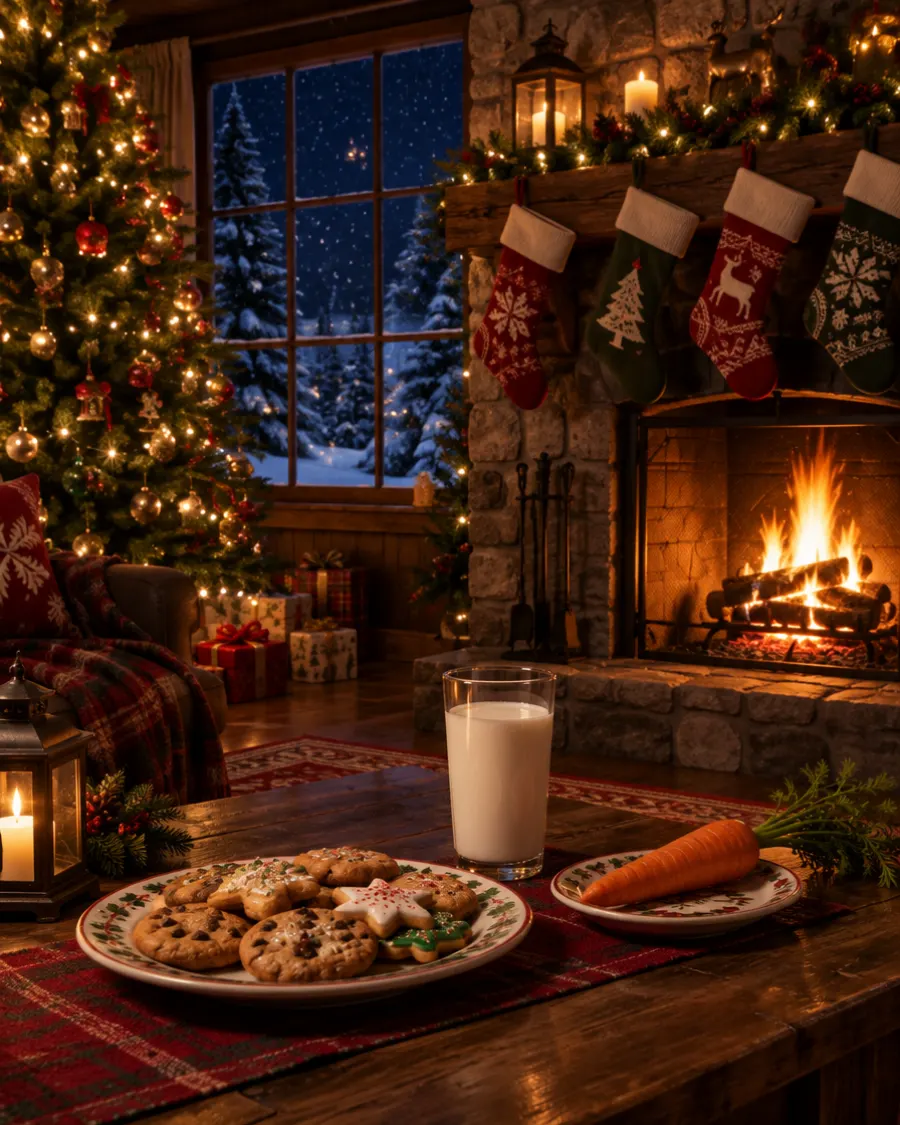
- 4Treats for Santa and the reindeerA cookie mix, a special plate and a bag of “reindeer food.”
- 5Something small to doA coloring book, a puzzle, slippers or a flashlight for the NORAD check.
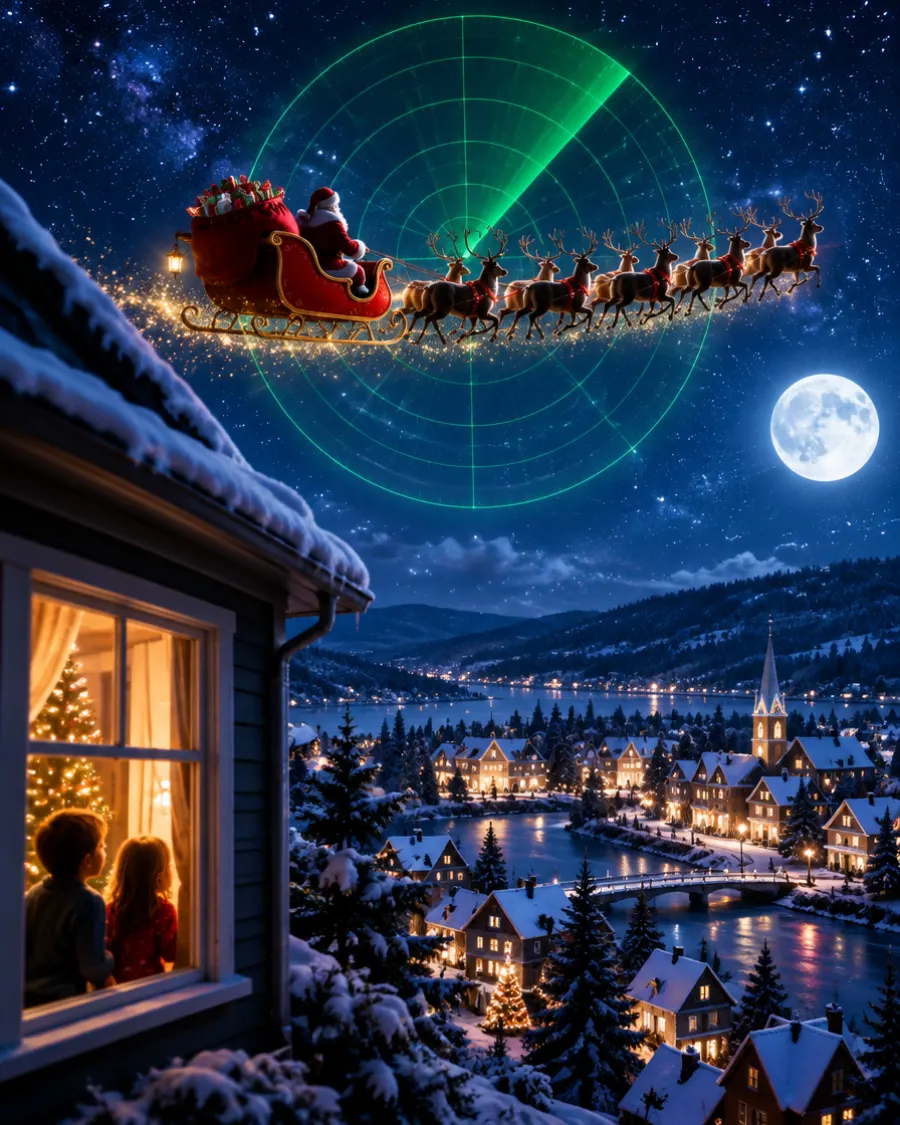
Many families also follow Santa’s progress during the evening — see our NORAD Tracks Santa guide.
New pajamas and other cozy rituals
Opening one gift on Christmas Eve — very often new pajamas — is a tradition in many households. It means everyone looks festive for Christmas morning photos, and it gives restless kids one small present to open early. Matching family pajamas, sometimes including the dog, have become especially popular.
Other common Christmas Eve rituals:
- A drive or walk to see neighborhood lights — see our lights guide.
- Watching a favorite movie together — ideas in our movie guide.
- Reading the Nativity story from the Gospel of Luke.
- Setting out stockings and hanging them “by the chimney with care.”
- A family toast, a special dessert or a fondue dinner.
- Sprinkling “reindeer food” (oats and sprinkles, without glitter) on the lawn.
Reading “’Twas the Night Before Christmas”
The poem known today as “’Twas the Night Before Christmas” was first published anonymously in the Troy Sentinel, a newspaper in Troy, New York, on December 23, 1823, under the title “Account of a Visit from St. Nicholas.” It was later attributed to Clement Clarke Moore, a New York professor, who included it in his 1844 collection Poems. Some descendants of Henry Livingston Jr. have argued that he wrote it instead, and scholars still debate the question.
Whoever wrote it, the poem shaped the American Santa Claus more than any other work — the sleigh, the eight named reindeer, the rooftop landing, the trip down the chimney and the round, jolly figure. Here is the opening as it appeared in the 1823 newspaper, with its original spelling and punctuation:
’Twas the night before Christmas, when all thro’ the house,
Not a creature was stirring, not even a mouse;
The stockings were hung by the chimney with care,
In hopes that St. Nicholas soon would be there;
The children were nestled all snug in their beds,
While visions of sugar plums danc’d in their heads,
And Mama in her ’kerchief, and I in my cap,
Had just settled our brains for a long winter’s nap—
When out on the lawn there arose such a clatter,
I sprung from the bed to see what was the matter,
Away to the window I flew like a flash,
Tore open the shutters, and threw up the sash.
The moon on the breast of the new fallen snow,
Gave the lustre of mid-day to objects below;
When, what to my wondering eyes should appear,
But a miniature sleigh, and eight tiny rein-deer,
With a little old driver, so lively and quick,
I knew in a moment it must be St. Nick.
More rapid than eagles his coursers they came,
And he whistled, and shouted, and call’d them by name:
“Now! Dasher, now! Dancer, now! Prancer, and Vixen,
“On! Comet, on! Cupid, on! Dunder and Blixem;
“To the top of the porch! to the top of the wall!
“Now dash away! dash away! dash away all!”
Notice the last two reindeer: in 1823 they were “Dunder and Blixem,” from Dutch words for thunder and lightning. Later printings changed them, and by Moore’s 1844 book they had become “Donder and Blitzen”; many modern editions use “Donner.” You can read the complete poem at Project Gutenberg.
Make it a ritual: read the poem aloud as the very last thing before bed, with each family member taking a few lines. Little ones love shouting out the reindeer names.
Christmas Eve around the world
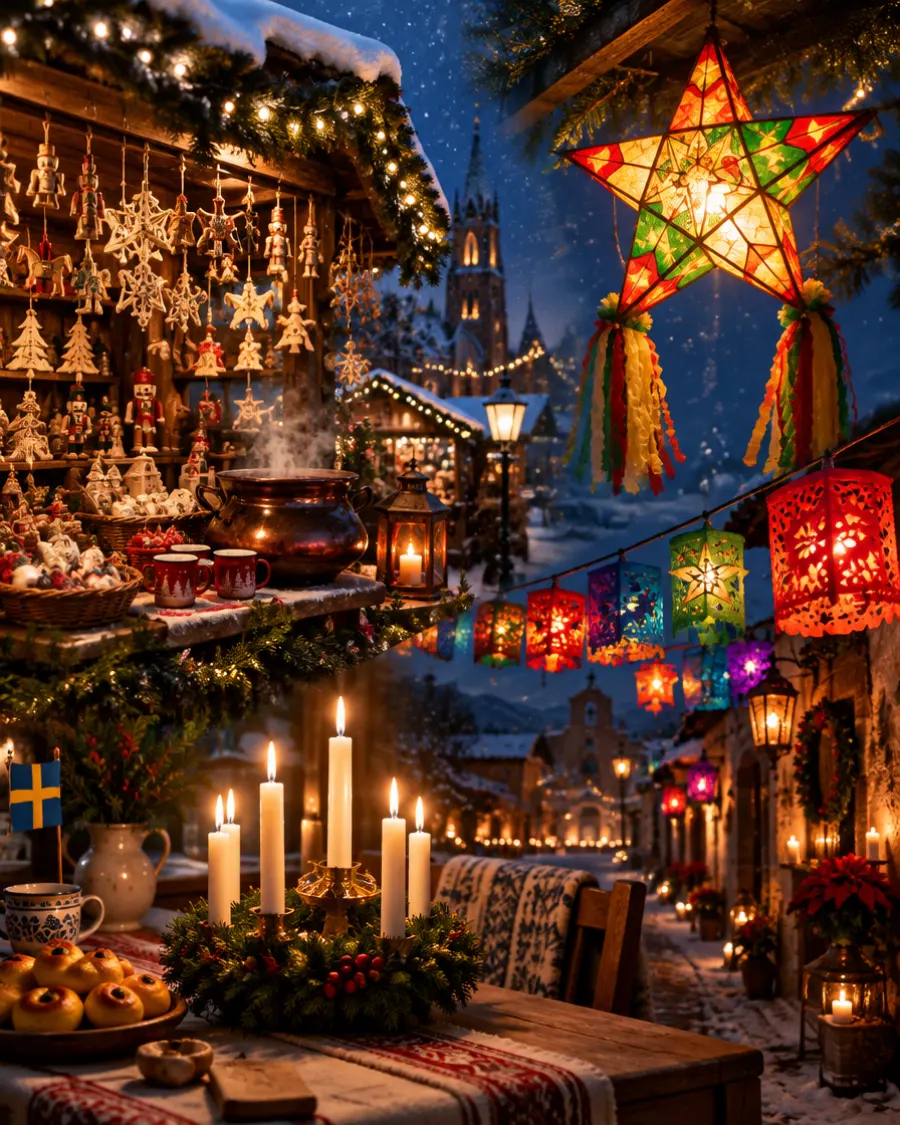
In much of Europe and Latin America, Christmas Eve is the main event. A few traditions you may know from family heritage:
- 1Poland — WigiliaThe meatless Christmas Eve supper traditionally begins when the first star appears. Families share a thin wafer called opłatek while exchanging good wishes, often set an extra place for an unexpected guest, and many serve twelve dishes.
- 2Germany and Austria — HeiligabendGifts are usually opened on Christmas Eve, traditionally brought by the Christkind. In many homes the decorated tree is revealed to children that evening.
- 3ScandinaviaIn Denmark, Norway and Sweden, December 24 is the big day, with a festive dinner, gifts and, in Denmark and Norway, dancing hand in hand around the tree.
- 4Mexico — NochebuenaThe nine nights of Las Posadas end on Christmas Eve, followed by a late family feast and often midnight Mass.
- 5The Philippines — Noche BuenaAfter the series of dawn Masses called Simbang Gabi, families gather for a big midnight meal.
- 6Italy — La VigiliaA meatless seafood dinner and midnight Mass — the root of the Italian-American Feast of the Seven Fishes.
Explore more in our Christmas around the world guide and our overview of Christmas traditions.
Planning a calm, happy Christmas Eve
Christmas Eve can be magical — or frantic. A few tips to keep it joyful:
- Wrap early. Finish wrapping a day or two before so the evening isn’t spent with tape and scissors.
- Keep dinner simple if Christmas Day is the big meal — soup, a casserole or a make-ahead dish.
- Set a bedtime plan that kids know in advance, tied to Santa’s arrival.
- Prep the morning. Set out breakfast ingredients, charge cameras and batteries, and put batteries with toys that need them.
- Pause together. Light a candle, read the poem, sing one carol — even five quiet minutes make a memory.
Count down to the big night with our Christmas countdown.
Frequently asked questions
What is the Feast of the Seven Fishes?
It is an Italian-American Christmas Eve seafood dinner rooted in the southern Italian custom of avoiding meat on the vigil of Christmas. In Italy the meal is usually called La Vigilia; the name “Feast of the Seven Fishes” appears to have become popular in the United States around the 1980s.
Who wrote “’Twas the Night Before Christmas”?
The poem was published anonymously as “Account of a Visit from St. Nicholas” in the Troy Sentinel on December 23, 1823. It is generally attributed to Clement Clarke Moore, who claimed it in 1844, though some argue Henry Livingston Jr. wrote it.
What goes in a Christmas Eve box?
Typical items include new pajamas, a Christmas book or movie, hot cocoa and a mug, treats for Santa and his reindeer, and a small activity like a coloring book or puzzle.
Why do some countries open presents on Christmas Eve?
In much of Europe and Latin America, Christmas Eve is the main celebration. In Germany, Poland, Scandinavia and elsewhere, families traditionally exchange gifts after dinner on December 24.
Advertisement