Updated Oct 26, 2026
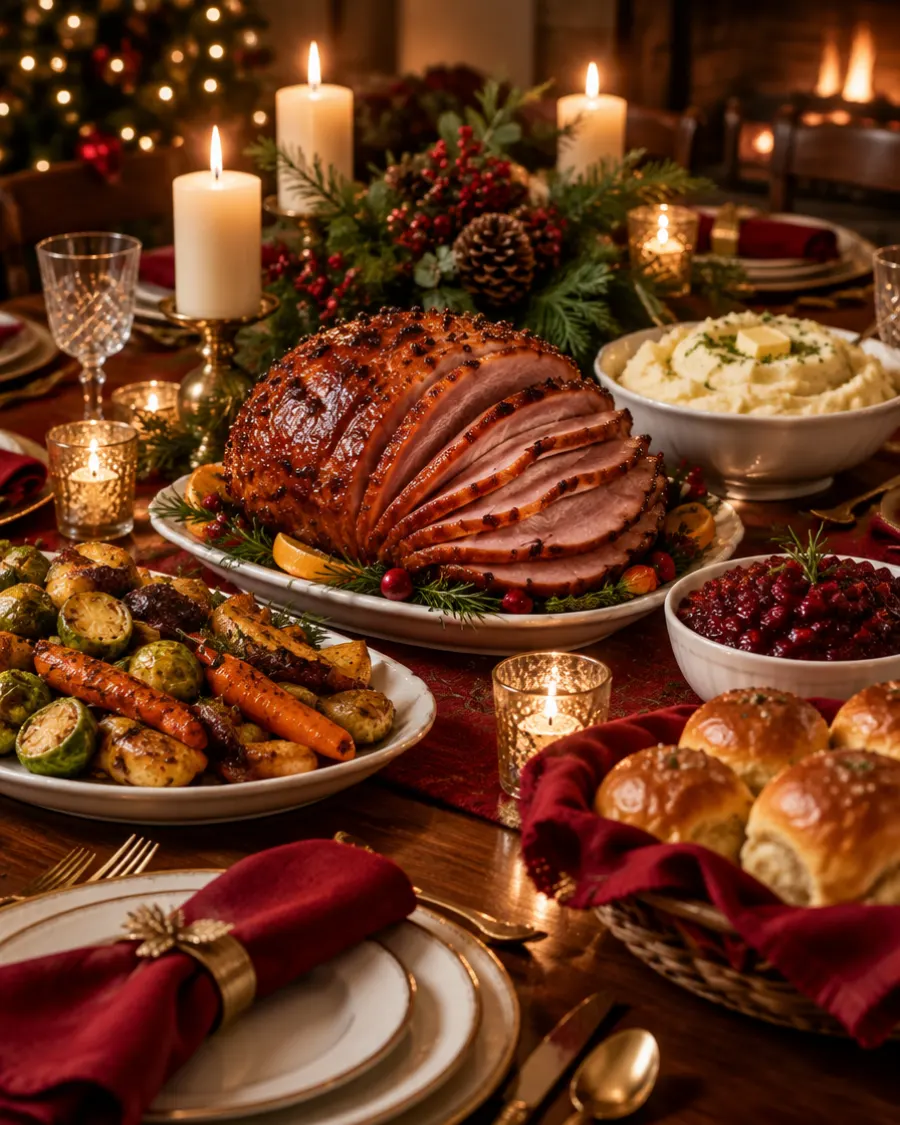
Brown sugar and mustard glazed ham
You need: 1 fully cooked bone-in spiral-sliced ham (8–10 lb), 1 cup packed brown sugar, ¼ cup honey or maple syrup, 3 tbsp Dijon mustard, 2 tbsp orange juice or apple cider, ¼ tsp ground cloves.
- Heat oven to 325°F. Place ham cut side down in a roasting pan and add ½ cup water to the pan.
- Cover tightly with foil and bake about 10–14 minutes per pound.
- Meanwhile, simmer brown sugar, honey, mustard, juice and cloves in a small pan for 2–3 minutes until glossy.
- About 30 minutes before the ham is done, remove the foil and brush on half the glaze.
- Raise the heat to 400°F and bake 10–15 minutes more, brushing on the rest of the glaze, until bubbly and caramelized.
- Heat until a thermometer in the thickest part (not touching bone) reads 140°F. Rest 15 minutes before serving.
Most store hams are fully cooked and only need reheating to 140°F. A fresh or uncooked ham must be cooked to 145°F and rested at least 3 minutes. Check the label.
How to roast prime rib (the basics)
You need: 1 bone-in standing rib roast (about 3 ribs, 6–8 lb), 2 tbsp kosher salt, 1 tbsp coarse black pepper, 4 cloves garlic (minced), 2 tbsp chopped fresh rosemary and thyme, 2 tbsp olive oil or softened butter.
- The day before (or at least a few hours ahead), season the roast all over with salt and refrigerate uncovered. This seasons the meat deeply and dries the surface for better browning.
- Let the roast sit at room temperature about 1 hour before cooking. Rub with garlic, herbs, pepper and oil.
- Heat oven to 450°F. Place the roast bone side down in a roasting pan and roast 20 minutes to brown.
- Lower the heat to 325°F and keep roasting until a thermometer in the center reads your target (see below). Plan very roughly 13–15 minutes per pound total, but trust the thermometer.
- Rest the roast, loosely tented with foil, 20–30 minutes. The temperature will rise several degrees.
- Cut the bones away along the rib, then slice the roast across the grain.
Doneness guide (when you pull it from the oven): about 120–125°F for rare to medium-rare after resting; about 130–135°F for medium. The USDA recommends cooking beef roasts to at least 145°F with a 3-minute rest for safety; restaurant-style medium-rare is below that guideline, so serve it pinker only if your guests are comfortable with it, and cook to 145°F for anyone pregnant, very young, elderly or with a weakened immune system.
Advertisement
Creamy make-ahead mashed potatoes
You need: 5 lb Yukon Gold or russet potatoes, 1 tbsp salt for the water, ¾ cup butter, 1–1½ cups whole milk or half-and-half (warmed), 4 oz cream cheese or ½ cup sour cream, salt and pepper, chives.
- Peel and cut potatoes into even 2-inch chunks. Cover with cold water in a large pot, add salt and bring to a boil.
- Simmer 15–20 minutes until a fork slides in easily. Drain well and return to the warm pot for a minute to dry.
- Mash with butter and cream cheese, then add warm milk a little at a time until creamy. Use a masher or ricer — a blender or food processor makes potatoes gluey.
- Season generously with salt and pepper and top with chives.
- To make ahead: spread in a buttered baking dish, cool, cover and refrigerate up to 2 days. Reheat covered at 350°F for 30–40 minutes, stirring in a splash of milk.
Fresh green beans with crispy shallots (a casserole alternative)
You need: 2 lb fresh green beans (trimmed), 3 tbsp butter or olive oil, 3 shallots (thinly sliced), 8 oz mushrooms (sliced), 2 cloves garlic (minced), 1 tbsp lemon juice, salt, pepper, ⅓ cup toasted sliced almonds.
- Boil green beans in well-salted water for 3–4 minutes until bright green and crisp-tender. Drain and plunge into ice water, then drain again. (You can do this a day ahead.)
- In a large skillet, cook shallots in 2 tbsp butter over medium heat until deep golden and crisp, 8–10 minutes. Lift out onto a paper towel.
- Add the remaining butter and the mushrooms; cook until browned. Add garlic for 30 seconds.
- Add the green beans and toss until hot. Season with lemon juice, salt and pepper.
- Top with crispy shallots and almonds just before serving.
It has the same flavors as a classic green bean casserole — beans, mushrooms and crunchy onions — but cooks on the stovetop and frees up oven space.
Maple roasted root vegetables
You need: 1½ lb carrots, 1 lb parsnips, 1 lb Brussels sprouts (halved), 1 small butternut squash or 2 sweet potatoes (cubed), 1 red onion (wedges), 3 tbsp olive oil, 2 tbsp maple syrup, 1 tsp salt, ½ tsp pepper, fresh thyme.
- Heat oven to 425°F. Cut vegetables into similar-sized pieces so they cook evenly.
- Toss with oil, salt, pepper and thyme. Spread on two large sheet pans in a single layer — crowding makes them steam instead of brown.
- Roast 25 minutes, then stir and drizzle with maple syrup.
- Roast 10–15 minutes more until tender and caramelized at the edges.
Holiday drinks: cooked eggnog and hot cocoa
Classic cooked eggnog — you need: 6 large egg yolks, ½ cup sugar, 2 cups whole milk, 1 cup heavy cream, 1 tsp vanilla, ½ tsp freshly grated nutmeg plus more for topping, pinch of salt.
- Whisk yolks and sugar in a bowl until pale.
- Heat milk, cream, nutmeg and salt in a saucepan until steaming (not boiling).
- Slowly whisk about a cup of the hot milk into the yolks to warm them, then pour everything back into the pan.
- Cook over low heat, stirring constantly, until the mixture thickens slightly and reaches 160°F on a thermometer.
- Strain into a pitcher, stir in vanilla and chill at least 3 hours. Serve topped with nutmeg.
Eggnog made with raw, uncooked eggs can carry salmonella. Cook the egg mixture to 160°F as above, or use pasteurized eggs. Adding alcohol does not reliably make raw eggs safe.
Rich hot cocoa — you need: 4 cups whole milk, ¼ cup unsweetened cocoa powder, ¼ cup sugar, pinch of salt, 3 oz chopped semisweet chocolate, 1 tsp vanilla. Toppings: whipped cream, marshmallows, crushed candy canes.
- Whisk cocoa, sugar, salt and about ½ cup of the milk in a saucepan into a smooth paste.
- Whisk in the rest of the milk and heat over medium until steaming.
- Add the chocolate and whisk until melted and smooth. Stir in vanilla.
- Pour into mugs and add toppings.
Set up a hot cocoa bar with toppings for a fun Christmas Eve treat — see our family activities guide.
Christmas dinner timeline: what to do when
- 11–2 weeks beforePlan the menu and guest count. Order a ham or rib roast from the butcher if needed. Check that you have a meat thermometer, roasting pan and enough serving dishes.
- 23–4 days beforeShop for nonperishables. If your roast or turkey is frozen, start thawing it in the refrigerator — allow about 24 hours for every 4–5 pounds.
- 32 days beforeShop for fresh produce. Bake pies and cookies. Make cranberry sauce.
- 41 day beforeSalt the prime rib. Make mashed potatoes and blanch green beans. Make eggnog. Set the table.
- 5Morning ofTake the roast out to come to room temperature. Prepare vegetables for roasting. Chill drinks.
- 63–4 hours before dinnerPut the main dish in the oven.
- 71 hour beforeReheat potatoes and roast vegetables.
- 830 minutes beforeRest the meat. Finish green beans. Warm rolls. Make gravy from pan drippings.
Planning a big dinner on a budget? Use our Christmas budget calculator to keep food costs in check.
Leftover safety: USDA guidelines
Holiday buffets are a classic setup for foodborne illness because food sits out for hours. Follow these general USDA food safety rules:
- The 2-hour rule: refrigerate leftovers within 2 hours of cooking or taking them out of the oven. If the room is very warm (above 90°F), make it 1 hour.
- Cool quickly: divide large amounts into small, shallow containers so they chill fast. Slice ham or roast off the bone before refrigerating.
- Fridge temperature: keep the refrigerator at 40°F or below and the freezer at 0°F.
- Use within 3 to 4 days: cooked leftovers should be eaten within about 3–4 days, or frozen for longer storage.
- Reheat to 165°F: heat leftovers until they reach 165°F, and bring sauces, soups and gravies to a rolling boil.
- When in doubt, throw it out. You can’t tell whether food is safe by smell or look.
Leftover ham ideas: ham and bean soup with the bone, breakfast hash, ham and cheese sliders, or a quiche. Leftover prime rib makes excellent French dip sandwiches.
Dessert ideas
Finish with something festive but simple:
- A platter of homemade Christmas cookies
- Pecan or pumpkin pie (bake a day ahead)
- Bûche de Noël, the French yule log cake
- Gingerbread cake with whipped cream
- Peppermint bark — melted dark and white chocolate layered with crushed candy canes
- Store-bought panettone, sliced and toasted, served with fruit
After dinner, try a round of Christmas trivia or our Christmas jokes while the dishes soak.
Frequently asked questions
What is a traditional American Christmas dinner?
There is no single tradition, but glazed ham, prime rib or roast beef, and turkey are the most common mains, served with mashed potatoes, vegetables, rolls and desserts such as pie and cookies.
What temperature should ham be heated to?
Reheat a fully cooked ham to 140°F. Cook a fresh or uncooked ham to 145°F and let it rest at least 3 minutes.
Is homemade eggnog safe?
Eggnog made with raw eggs can carry salmonella. Cook the egg mixture to 160°F or use pasteurized eggs.
How long can Christmas leftovers stay out?
No more than 2 hours at room temperature, or 1 hour if it is above 90°F. Refrigerate leftovers and eat them within 3 to 4 days.
Advertisement