Updated Oct 26, 2026
The Nativity: what Christmas celebrates
At its heart, Christmas is the Christian feast celebrating the birth of Jesus of Nazareth. The story comes from two books of the New Testament. The Gospel of Luke tells of Mary and Joseph traveling to Bethlehem, the birth in a stable, the manger and the shepherds who hear the news from angels. The Gospel of Matthew adds the star and the wise men (the Magi) who bring gold, frankincense and myrrh.
Neither gospel gives a date or even a season for the birth. The earliest Christians focused far more on Easter, the celebration of Jesus’ resurrection, than on his birthday. For the first two or three centuries there is little evidence of any regular birthday feast at all. Christian writers of that era sometimes guessed at a date, and their guesses ranged across the calendar — spring dates were suggested as often as winter ones.
That is worth remembering whenever you read a confident claim about the “real” day Jesus was born. Historians simply do not know it. What they can trace is when and where Christians began to celebrate the birth on a fixed day.
Why December 25? What the records actually show
The oldest surviving record of a December 25 Nativity celebration comes from Rome in the 4th century. A Roman calendar document known as the Chronograph of 354 lists the birth of Christ on December 25, and scholars generally read it as reflecting practice in the Roman church by the 330s. From Rome, the date spread across the western church over the following decades.
The eastern churches had long marked the birth together with Jesus’ baptism on January 6 (Epiphany). Over time most of them also accepted December 25, though some kept their own timing — which is one reason Christmas still falls on different days in different traditions today (more on that in our Christmas around the world guide).
Why did Rome pick December 25? There is no surviving decree that explains it, so historians offer theories rather than certainties:
- The winter-festival theory. Late December was already a festive season in the Roman world, and the solstice marked the return of longer days. Some scholars think the church chose a date that would compete with — and give Christian meaning to — popular pagan celebrations.
- The calculation theory. Other scholars point to an old belief that important figures died on the same date they were conceived. If Jesus was thought to have been conceived (and to have died) around March 25, then a birth nine months later lands on December 25. Writers in the early church did reason along these lines.
Both ideas have serious defenders, and they are not mutually exclusive. The honest answer is that the exact reason is unknown.
Saturnalia, Yule and the “pagan roots” debate
You will often hear that Christmas “is really” a pagan holiday. The real picture is more interesting and less tidy.
Saturnalia was a Roman festival honoring the god Saturn, held in mid-to-late December. Ancient writers describe feasting, gift-giving, candles, relaxed social rules and a general holiday mood. Some Christmas customs — feasting, giving small gifts, a season of merriment — look similar, and many historians believe the festive atmosphere carried over as Rome became Christian. Whether specific customs passed directly from Saturnalia to Christmas is debated.
A related claim links December 25 to the Roman cult of the Unconquered Sun (Sol Invictus). This is a popular theory, but scholars disagree about how important that festival was and which came first, so treat it as a possibility rather than settled fact.
Yule was a midwinter festival of the Germanic and Norse peoples of northern Europe. Our knowledge of how it was celebrated before Christianity is limited, because most written descriptions come from later, Christian-era sources. What is clear is that when northern Europe became Christian, the word “Yule” survived as a name for the Christmas season, and customs such as the Yule log, evergreens and midwinter feasting became part of Christmas in those lands.
The fair summary: Christmas is a Christian feast whose date and many customs grew up alongside — and sometimes absorbed — older winter traditions. Historians argue about exactly how much was borrowed, and new research keeps refining the story.
Advertisement
Christmas in the Middle Ages
By the Middle Ages, Christmas was one of the great feasts of the Christian year across Europe. Church services marked the day, but the season around it could be long and lively. The Twelve Days of Christmas ran from December 25 to Epiphany on January 6, and in many places work slowed and feasting took over.
Medieval Christmas was often loud and public rather than quiet and family-centered. Customs varied by region, but included:
- Feasting by lords and communities, sometimes with roasted boar or other special dishes.
- Mumming — groups in costume going from house to house performing short plays or songs.
- Wassailing — toasting health and good fortune, sometimes going door to door with a shared drink.
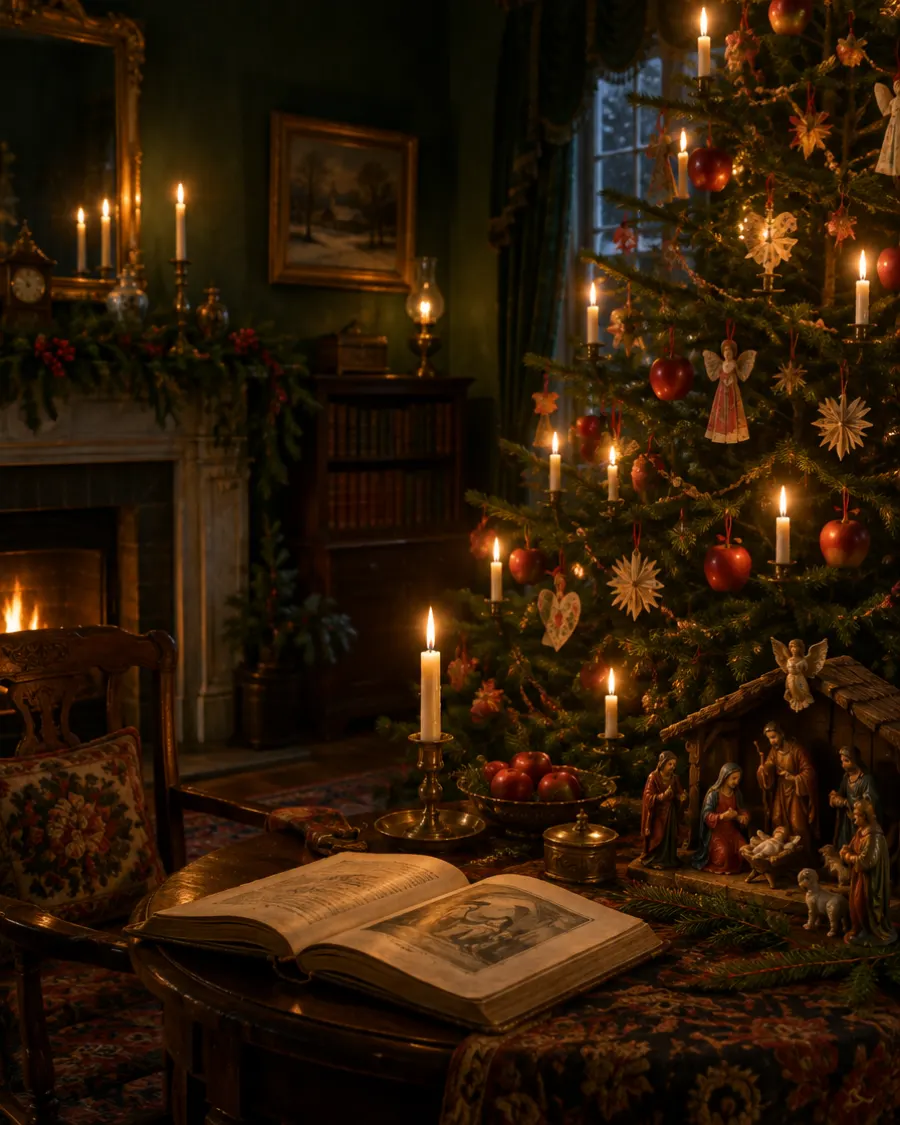
- Nativity plays and carols. The tradition of setting up a Nativity scene is often linked to Francis of Assisi in the 13th century.
- The “Lord of Misrule” in some English households, a person appointed to lead the season’s games and turn normal order upside down for a while.
That rowdy side — drinking, gambling and boisterous street celebrations — would later give critics plenty of ammunition.
When Christmas was banned: the Puritans
During the Protestant Reformation, some reformers questioned Christmas. The strictest English Protestants, the Puritans, argued that the Bible did not command a Christmas feast, that December 25 had no scriptural basis and that the season’s drinking and disorder were sinful.
When Parliament gained power during the English Civil War, it acted on those views. In the 1640s Parliament moved to suppress Christmas observance, and by 1647 an ordinance had abolished it along with other church feast days. Many ordinary people resented this, and there were protests and even riots in some towns. Christmas returned openly after the monarchy was restored in 1660.
Across the Atlantic, the Puritans of New England had their own rules. In 1659 the General Court of the Massachusetts Bay Colony made celebrating Christmas an offense punishable by a five-shilling fine. The law was repealed in 1681, but disapproval lingered. For generations afterward, many New Englanders treated December 25 as an ordinary workday, and schools and shops often stayed open.
Other colonies were different. In places settled by Anglicans, Catholics, Dutch and German immigrants, Christmas customs carried on — which is why the American holiday ended up a blend of many traditions.
How 19th-century writers reinvented Christmas
In the early United States, Christmas was celebrated unevenly, and in cities it could still be a time of rowdy street gangs and drinking. During the 1800s a handful of writers helped reshape it into a gentler holiday centered on home, children and generosity.
- 1Washington IrvingHis 1809 satirical history of New York, written as “Diedrich Knickerbocker,” featured St. Nicholas, and his Sketch Book (1819–20) included warm essays about old-fashioned English Christmas celebrations at a country manor.
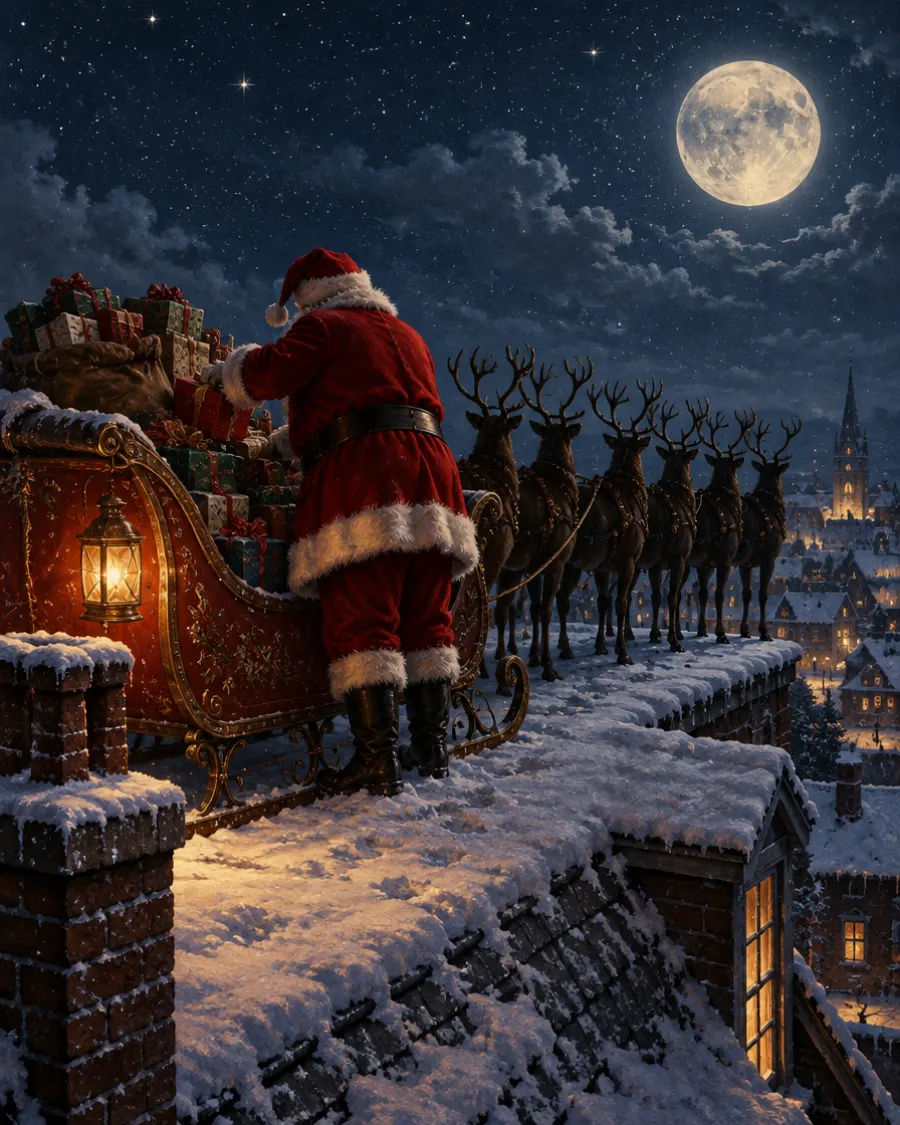
- 2“A Visit from St. Nicholas” (1823)Published anonymously in a Troy, New York, newspaper and later credited to Clement Clarke Moore, the poem gave Americans a jolly St. Nick with a sleigh and eight reindeer who comes down the chimney on Christmas Eve.
- 3Charles Dickens, 1843A Christmas Carol, the story of Ebenezer Scrooge, made charity, family dinners and goodwill the center of the holiday for readers in Britain and America alike.
- 4Thomas NastFrom the 1860s his drawings in Harper’s Weekly shaped how Americans pictured Santa Claus.
At the same time, immigrants were bringing their own customs. German families popularized the decorated Christmas tree, and the publication of a picture of Queen Victoria’s family tree in 1848 helped make it fashionable. Christmas cards, first produced commercially in England in 1843, caught on in America later in the century. Read more about those symbols in our traditions guide.
Christmas becomes a federal holiday (1870)
States began recognizing Christmas one by one in the 1800s. Massachusetts, once the home of the ban, made it a legal holiday in 1856. The biggest step came on June 28, 1870, when Congress passed and President Ulysses S. Grant signed a law making Christmas Day a holiday for federal workers in the District of Columbia, alongside New Year’s Day, the Fourth of July and Thanksgiving. Over time, federal holiday law was extended so that December 25 became a paid holiday for federal employees nationwide.
When December 25 falls on a weekend, federal workers generally get the nearest weekday off instead — Friday if Christmas is on Saturday, Monday if it is on Sunday. Many private employers follow a similar pattern, but they are not required to.
Christmas is the only federal holiday in the U.S. tied to a religious feast. Courts have generally upheld it because the day also has broad secular and cultural meaning for Americans of many backgrounds.
The modern American Christmas
By the 20th century, the American Christmas had taken on the shape most people recognize: a decorated tree, stockings, Santa Claus, gift-giving, carols, special foods and a family gathering on Christmas Eve or Christmas Day. New layers kept arriving:
- Department stores built holiday window displays and Santa visits, and the shopping season grew longer.
- Radio, film and television added new classics — songs, holiday movies and animated specials that families rewatch every year. See our Christmas movie guide and carols guide.
- Public celebrations such as the National Christmas Tree in Washington, D.C., and the tree at Rockefeller Center in New York became annual events.
- Charity drives, toy collections and volunteering became part of the season for many families.
- Newer traditions — tracking Santa online, light displays synchronized to music, ugly sweater parties and Secret Santa gift exchanges at work.
For Christians, Christmas remains a major religious feast marked by church services, often including a midnight or candlelight service on Christmas Eve, and the season of Advent beforehand. For many other Americans it is a cultural holiday about family, generosity and a break at the darkest time of the year. Both meanings live side by side, which helps explain why Christmas is so widely celebrated in the United States.
Christmas history at a glance
- 11st centuryGospels of Luke and Matthew tell the Nativity story, with no date given
- 24th centuryEarliest record of a December 25 Nativity feast, in Rome
- 3Middle AgesTwelve Days of Christmas, feasting, carols and Nativity plays
- 41647England’s Parliament abolishes Christmas and other feast days
- 51659–1681Massachusetts Bay Colony fines anyone caught celebrating
- 61823“A Visit from St. Nicholas” is published
- 71843Dickens publishes A Christmas Carol; first commercial Christmas card
- 81870Christmas becomes a federal holiday
Want to test what you learned? Try our Christmas trivia quiz, or count down the days with the Christmas countdown.
Frequently asked questions
Was Jesus really born on December 25?
No one knows. The Bible gives no date, and early Christians proposed several. December 25 is first recorded as the Nativity feast in Rome in the 4th century.
Is Christmas based on Saturnalia?
Saturnalia was a Roman December festival with feasting and gift-giving, and many historians think its festive mood influenced Christmas. Whether the date or specific customs were borrowed directly is still debated.
Why did the Puritans ban Christmas?
They believed the Bible did not command a Christmas feast and objected to the drinking and disorder of the season. England abolished it in the 1640s, and Massachusetts fined celebrants from 1659 to 1681.
When did Christmas become a federal holiday?
On June 28, 1870, when President Ulysses S. Grant signed a law that made Christmas Day a federal holiday.
Advertisement