Updated Oct 26, 2026
America’s holiday calendar of events
Between Thanksgiving and New Year’s Day, cities and small towns across the United States put on a remarkable string of public celebrations. Some are broadcast nationally and draw enormous crowds; others are local traditions that feel just as magical to the families who return every year.
This guide covers the major types of Christmas events and the famous examples of each. It does not list dates, times or ticket prices, because those change every season. Always confirm details on the event’s official website before you go — and check whether tickets or timed reservations are required, since many popular events now sell out early.
Looking for neighborhoods and parks with spectacular displays near you? See our state-by-state guide to Christmas light displays.
The Rockefeller Center Christmas Tree, New York City
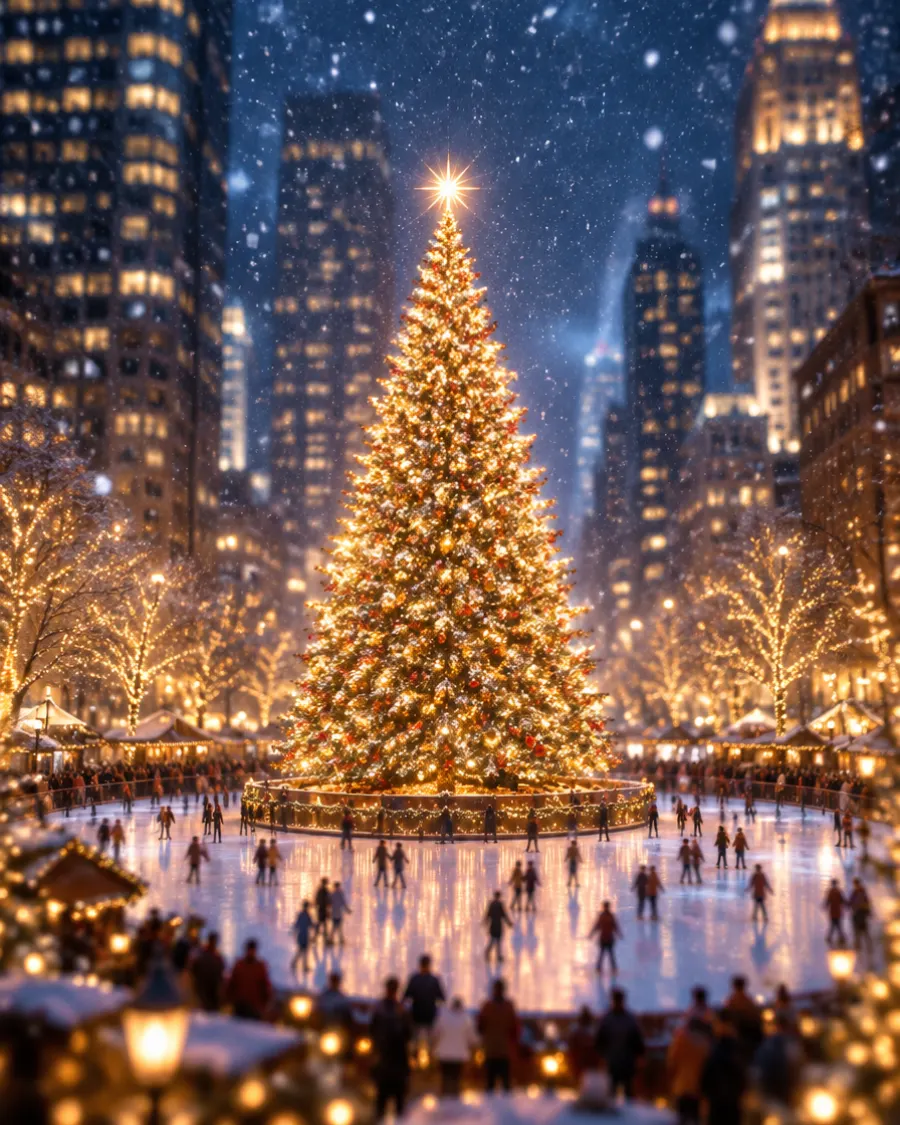
The most famous Christmas tree in America stands above the skating rink at Rockefeller Center in Midtown Manhattan. Its story began during the Great Depression: on Christmas Eve 1931, construction workers building the complex pooled their money for a modest balsam fir of about 20 feet and decorated it with homemade garlands and, according to many accounts, tin cans. Two years later, in 1933, Rockefeller Center held its first official tree lighting.
Today the tree is usually a towering Norway spruce, often donated by a homeowner in the Northeast, and it is crowned with a large star. The lighting ceremony is televised nationally, with musical performances leading up to the moment the lights switch on.
- 1Expect crowdsLighting night is extremely busy, with security screening and closed streets. Many families prefer to visit on a weekday evening later in the season.
- 2Make a day of itThe tree is a short walk from the Fifth Avenue window displays and the angel sculptures in the Channel Gardens.
- 3Watch for the recycled treeAfter the season, the tree’s lumber has in recent years been donated for home-building projects — a nice detail to share with kids.
The National Christmas Tree, Washington, D.C.
On Christmas Eve 1923, President Calvin Coolidge walked from the White House to the Ellipse and switched on the lights of a large balsam fir donated by Middlebury College in Vermont. It was the first National Christmas Tree lighting, and every presidential administration since has taken part in the tradition. The idea came from a local community organizer, and First Lady Grace Coolidge is credited with suggesting the Ellipse as the location.
The ceremony is now organized with the National Park Service in President’s Park, just south of the White House. Over the decades both cut trees and living trees have served as the national tree. Around it, smaller trees decorated by each U.S. state, territory and the District of Columbia create a walkable display that families enjoy exploring to find their home state.
Free tickets to the televised lighting ceremony have typically been distributed by lottery, while the tree and surrounding displays can usually be visited for free throughout the season. Check the official National Christmas Tree and National Park Service websites for current information.
Advertisement
Santa’s arrival at the Macy’s Thanksgiving Day Parade
For millions of Americans, the “official” start of the Christmas season is a moment on Thanksgiving morning: Santa Claus riding his sleigh float at the very end of the Macy’s Thanksgiving Day Parade in New York City. The parade began in 1924, and Santa’s appearance as the grand finale has been part of it from the early years. The film Miracle on 34th Street (1947) famously opens at the parade.
Watching in person means arriving very early to claim a curbside spot along the route, dressing in layers and bringing snacks. Many families instead make it a cozy at-home tradition, watching the broadcast in pajamas while the turkey roasts. Other cities hold their own Thanksgiving or holiday parades with a Santa finale, so check your local listings too.
Holiday window displays in New York
Decorating store windows for the holidays is a tradition that grew up with big-city department stores in the late 1800s and early 1900s. New York’s Fifth Avenue and Herald Square remain the place to see it done on a grand scale. Each year, major department stores unveil elaborate animated windows — moving figures, miniature scenes, dazzling lights and sometimes a story told window by window. Some stores add a light-and-music show across the building’s facade.
The window walk is free and makes a great evening outing. Go after dark for the best effect, and try a weekday to avoid the thickest crowds. Bring a stroller-friendly route in mind, as sidewalks become very busy in December.
Not near New York? Many downtowns across the country hold window-decorating contests for local shops. A stroll down your own Main Street can be just as charming.
German-style Christmas markets
Outdoor Christmas markets are an old tradition in Germany, Austria and other parts of Central Europe, where wooden stalls sell ornaments, crafts, gingerbread, roasted nuts and hot spiced wine. American cities have embraced the idea with enthusiasm.
One of the best known is Christkindlmarket Chicago. It opened in 1996 with a handful of booths at Pioneer Court, organized by the German American Chamber of Commerce of the Midwest and inspired by the famous market in Nuremberg. The following year it moved to Daley Plaza in the Loop, where it has become a major holiday attraction, and it has since added other locations.
Many other cities now host markets with similar features — Philadelphia, New York, Denver, Washington, D.C., and plenty of smaller towns among them. What to expect at most markets:
- Handmade ornaments, nutcrackers, candles, wool hats and wooden toys.
- Bratwurst, pretzels, potato pancakes, gingerbread and roasted almonds.
- Hot cocoa for kids and mulled wine (often sold in a collectible souvenir mug) for adults.
- Live music, carolers and sometimes a visit from Santa or the Christkind, the angel-like gift-bringer of German tradition.
Zoo lights, botanical garden lights and drive-through shows
Some of the most popular family outings of the season are evening light festivals at zoos, botanical gardens and parks. Paths are lined with hundreds of thousands — sometimes millions — of lights shaped into animals, tunnels, glowing trees and dancing displays synchronized to music.
- 1Zoo lightsMany major zoos run walk-through light shows after hours. Most animals are tucked in for the night, but the light sculptures of wildlife steal the show.
- 2Botanical garden lightsGardens drape their trees and conservatories in lights, often with fire pits, s’mores stations and holiday music.
- 3Drive-through displaysParks, fairgrounds and speedways host drive-through light routes — perfect for cold nights, toddlers in car seats or anyone with limited mobility.
Popular light festivals often sell timed tickets, and weekend nights fill up first. Dress warmly, bring a thermos, and consider going early in the season when crowds are lighter. For homes and neighborhoods famous for their displays, see our Christmas lights guide.
The Nutcracker and A Christmas Carol on stage
The Nutcracker ballet, with music by Pyotr Ilyich Tchaikovsky, premiered in St. Petersburg, Russia, in 1892. It became an American Christmas tradition much later. San Francisco Ballet staged the first complete American production in 1944, choreographed by Willam Christensen, and George Balanchine’s version for New York City Ballet premiered in 1954. Balanchine’s success helped inspire ballet companies and dance schools across the country to make The Nutcracker an annual event. Today you can see professional productions in major cities and charming local versions starring community dancers.
A Christmas Carol, Charles Dickens’s 1843 novella about Ebenezer Scrooge and the three spirits, is the other great holiday stage tradition. Many regional theaters perform their own adaptation every December, and some have done so for decades. It is a wonderful first “real theater” experience for kids around 8 and up, though the Ghost of Christmas Yet to Come can be scary for little ones.
Also look for holiday concerts — performances of Handel’s Messiah (including community sing-alongs), choir and orchestra pops concerts, and big-production holiday revues in larger cities.
Christmas train rides
Few things thrill young children like a Christmas train. Across the country, heritage and tourist railroads run special holiday excursions, many featuring Santa walking the aisles, hot cocoa, cookies and caroling.
Among the most popular are rides themed to The Polar Express, the 1985 picture book by Chris Van Allsburg that became a 2004 animated film. These officially licensed events are operated by a number of different railroads, and typically include a reading of the story, pajama-clad passengers and a gift of a silver sleigh bell. Other railroads run their own Santa trains, North Pole express rides or holiday light trains.
- Book early — popular departures often sell out well before December.
- Kids wearing pajamas is usually encouraged and adds to the fun.
- Many rides last about an hour, a good length for preschoolers.
America’s Christmas towns
Some towns have built their whole identity around the holiday. A weekend visit can feel like stepping into a Christmas card.
- 1Bethlehem, PennsylvaniaFounded by Moravian settlers in 1741 and named on Christmas Eve, it adopted the nickname “Christmas City, USA” in 1937. Expect a historic district, Moravian stars, a Christkindlmarkt and candlelit walking tours.
- 2Santa Claus, IndianaLocal legend says residents in the 1850s chose the name after their first choice was rejected by postal officials. Its post office still receives letters to Santa from around the world.
- 3North Pole, AlaskaA small city near Fairbanks with candy-cane streetlights and a year-round Christmas atmosphere.
- 4Leavenworth, WashingtonA Bavarian-style mountain village famous for its holiday lights and snowy setting.
- 5Frankenmuth, MichiganKnown as “Michigan’s Little Bavaria,” with German heritage, holiday shops and festive dining.
Many small towns also host a “Christmas walk” or holiday open house with carriage rides, luminarias and shops open late. Ask your local chamber of commerce or visitors bureau what is planned near you. Can’t travel? Send a letter instead with our Santa letter maker.
Frequently asked questions
When did the Rockefeller Center Christmas tree tradition start?
Construction workers put up the first tree at the site on Christmas Eve 1931, during the Great Depression. The first official tree lighting at Rockefeller Center was held in 1933.
Who lit the first National Christmas Tree?
President Calvin Coolidge lit the first National Christmas Tree on the Ellipse in Washington, D.C., on Christmas Eve 1923. The tree was a balsam fir donated by Middlebury College in Vermont.
Where can I find dates and tickets for these events?
Dates, times and ticket prices change every year, so check each event’s official website. Many popular light festivals, train rides and shows require advance or timed tickets.
When did The Nutcracker become a Christmas tradition in America?
San Francisco Ballet staged the first complete American production in 1944, and George Balanchine’s New York City Ballet version premiered in 1954. Its popularity led companies nationwide to perform it every holiday season.
Advertisement